




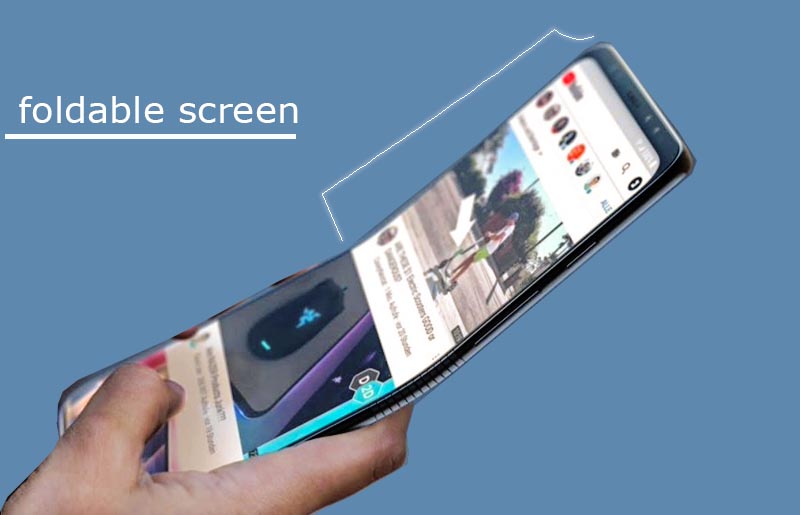
How is foldable screen of smartphone moving in the future? We learned that smartphones and tablets would have flexible screens back in 2013 when Samsung introduced its ‘Youm’ display on CES, but we just found them in a device that wasn’t an idea until last year.
However, within a short period, foldable television technology seems to have sufficiently evolved that LG made a rolling TV last year. It came into the limelight at its CES 2019 booth. While all that is fantastic, the folding OLED displays are sensitive, suggesting that they do require a security layer in the real objects, like in a smartphone. So they need foldable glass.
[adinserter block=”1″]
Till now, all the bendable cell phones have used plastic shielding covers as simple scratch resistance on the OLED screen. Yet these aren’t enough to last long or even for short-time endurance. Consider taking last year’s Samsung Galaxy Fold, which revoltingly failed in a resilience test. The Motorola Razr (2019) has also recorded some defects, varying between the display crashing apart within a week of usage and the collusion of the axis within just 4 hours of spinning for opening or closing it.
This year’s Samsung Galaxy Z Flip became the first handset to include a foldable glass screen. When we saw it for the first time at the launch case, it sure seemed like the real thing, with no actual signs that the display is unstable or sensitive. Even so, it pointed out that it is similar to the ordinary scratch-resistant glass today in longevity and fared almost as bad as the Galaxy Fold and the Motorola Razr (2019) during an endurance test.
[adinserter block=”1″]
Similar to the one used in the Galaxy Z Flip, foldable screen or ultra-thin glass (UTG) is still a first-generation feature, meaning it still has a long way to go before such glass can be as stable as those used on standard phones today while still being rigid. Mathias Mydlak, a Global Business Development Manager at Schott stated that the thickness is the major distinction between the flexible and conventional flat glass in addition to certain different “magic ingredients”.
Bendable glass is essentially glass that’s been stretched thin enough and then treated so that it can bend back and forth, without permanently losing its shape. However, according to Mydlak, the biggest issue is to make glass thin to the point where it is flexible. He also added that they defined Ultra-thin glass (UTG) by achieving a thickness of below 0.1 mm.
Schott claims it’s been using UTG glass for other applications for the past couple of decades and has a specially developed ‘down draw process.’ Here, a ribbon of glass is pulled back from the top, moving through different drums and via a cooling track to achieve the final outcome.
Schott is one of the few glass manufacturers on the market which already has a versatile glass solution. Samsung, one of its customers means that Schott most probably provided the UTG glass in the Galaxy Z Flip. Corning is also thought to work with phone manufacturers to incorporate their alternatives. A spokesperson for Corning ensured that they are working on that task with their clients and are currently evaluating their production glass with them to customize the product to suit their design requirements.
[adinserter block=”1″]
So far, that doesn’t appear to be the case. If we take the Galaxy Z Flip as an example, the durability test of a popular YouTube channel revealed that the UTG glass scratched just as easily as the plastic screens at the Galaxy Fold and Motorola Razr (2019). Indeed, a vigorous indent made by a fingernail also seemed to leave a permanent scratch on the glass.
Schott maintains that the scratch resistance of bendable glass is in the same range of regular, thicker glass and that all of this depends on the toughening process. “Separate glass-processing companies do the toughening processes. Therefore it depends finally on their processing steps and recipes, “Mydlak said. While Schott or Corning could provide the raw materials, this means that the hardness or longevity still relies on what kind of treatment the smartphone maker gives it, as well for now.
While Corning believes that a lot of work remains to be done before foldable phones are as durable as normal ones. “Generally, we believe today’s material sets of plastic options and options for glass do not meet all the desired attributes of a bendable device,” a Corning official told. Corning however states that in its R&D, foldable technology has already shown success in the thickness range of 30-100 micrometers.
[adinserter block=”1″]
The greatest durability challenge for foldable glass is its ability to maintain its structural integrity even after years of folding and unfolding, in addition to being able to resist scratches. Corning believes that while maintaining its flatness its developmental glass-based solution can bend more than 200,000 times without damages. Meanwhile, Mydlak stated that the lifetime of the foldable glass ultimately depends on the device manufacturer’s final design and processing. Another issue commonly found in foldable devices is a noticeable folding crease, which is normal but also draws attention away from the feeling of having a fairly flat screen.
The production cost of foldable glass is also higher than the traditional one of the same size. Although Mydlak did not comment clearly on how much more expensive it would be, he said that in the future both could be on a similar level at some points, provided that enough people are buying devices with bendable glass.
We can’t expect that foldable technology anytime soon to be widely popular but that doesn’t mean it won’t. There was a time when even flagship phones came with a single camera. Today, most of us won’t even look at the budget phone if it doesn’t have at least three cameras and that’s just on the back. When technology advances, it can revolutionize the way we use smartphones. So, this new feature can also bring a revolutionary change in the trend of smartphone technology.
Stay with Smrity Computer.




Like!! I blog quite often and I genuinely thank you for your information. The article has truly peaked my interest.
thanks for your comment
What’s up i am kavin, its my first time to commenting anywhere, when i read this article i thought i could also create comment due to
this brilliant post.
Thanks for your comments
It’s hard to find well-informed people for this topic, but you seem like
you know what you’re talking about! Thanks
thanks for your comment
Hmm it appears like your website ate my first comment (it was extremely
long) so I guess I’ll just sum it up what I submitted and say, I’m thoroughly enjoying your blog.
I as well am an aspiring blog blogger but I’m still new
to everything. Do you have any tips and hints for inexperienced blog writers?
I’d certainly appreciate it.
1st chose your topic, collect more and more info about your topic and start writing
My brother suggested I might like this web site. He was totally right.
This post actually made my day. You cann’t imagine simply how much time
I had spent for this information! Thanks!
thanks for your comment
For most up-to-date news you have to pay a quick visit internet
and on web I found this web page as a most excellent web page for
most up-to-date updates.
After looking over a few of the blog posts on your blog, I truly appreciate your technique of writing a blog.
I bookmarked it to my bookmark site list and will be checking back soon. Please check out
my website as well and tell me your opinion.
ok. thanks for your comment
Hi there! This is my first visit to your blog!
We are a team of volunteers and starting a new project in a community in the same niche.
Your blog provided us valuable information to work on. You have done a marvellous
job!
thanks for your comment
Greetings from Colorado! I’m bored to tears at work so I decided to
browse your blog on my iphone during lunch break. I
love the info you present here and can’t wait to take a look when I get home.
I’m surprised at how fast your blog loaded on my mobile .. I’m not even using WIFI, just 3G ..
Anyways, amazing site!
thanks for your valuable comment
I like what you guys tend to be up too. This kind of clever work and coverage!
Keep up the wonderful works guys I’ve added you guys to my own blogroll.
thanks a lot. Stay with us
I was able to find good information from your articles.
thanks for your comment. Stay with us
Great blog here! Also your website loads up fast! What web host are you
using? Can I get your affiliate link to your host?
I wish my site loaded up as quickly as yours lol
haha. Thanks for your valuable comment
Somebody essentially lend a hand to make significantly articles I’d
state. That is the very first time I frequented your web page and thus far?
I surprised with the analysis you made to create this particular publish amazing.
Excellent process!
Thanks 🙂
This is the right webpage for everyone who wants to find out about this
topic. You realize a whole lot its almost hard to
argue with you (not that I really would want to…HaHa).
You definitely put a new spin on a topic that’s been discussed for a long time.
Wonderful stuff, just great!
Hi there, I desire to subscribe for this website to take most recent updates, thus where can i do it please help.
With havin so much content do you ever run into
any issues of plagorism or copyright violation? My website has a lot of unique content I’ve
either written myself or outsourced but it seems a lot of it is popping it up all over
the internet without my authorization. Do you know any techniques to help reduce
content from being ripped off? I’d certainly appreciate it.
I have read so many articles regarding the blogger lovers but
this post is in fact a nice article, keep it
up.
These are actually wonderful ideas in about blogging.
You have touched some good things here. Any way keep up wrinting.
I am really grateful to the owner of this site who has shared this enormous piece of writing at at
this place.
excellent points altogether, you simply gained a emblem new reader.
What may you recommend in regards to your publish that you just made a few days in the past?
Any sure?
Woah! I’m really enjoying the template/theme of this website.
It’s simple, yet effective. A lot of times it’s
challenging to get that “perfect balance” between superb usability and appearance.
I must say you have done a fantastic job with this.
Also, the blog loads super fast for me on Safari.
Outstanding Blog!
thanks for your valuable feedback
You should take part in a contest for one of the highest quality websites on the internet.
I will highly recommend this web site!
thanks for your lovely comments. Stay with us
Incredible story there. What happened after?
Thanks!
Thanks for your comments. for more stay with us
Heya this is kind of of off topic but I was wondering if
blogs use WYSIWYG editors or if you have to manually
code with HTML. I’m starting a blog soon but have no coding knowledge so I wanted
to get advice from someone with experience.
Any help would be enormously appreciated!
you can contact us via eamil
Your style is very unique compared to other people I have read stuff from.
Many thanks for posting when you have the opportunity, Guess I’ll just bookmark this
blog.
Thank you so much
I seriously love your site.. Excellent colors & theme. Did you
build this website yourself? Please reply back as I’m attempting
to create my own personal site and want to learn where you got this
from or just what the theme is called. Appreciate it!
Our smrity computer team design and develop this site.
I don’t know whether it’s just me or if everyone else encountering problems with
your site. It appears as if some of the written text
in your content are running off the screen. Can somebody else please comment and let me know if this is happening to them too?
This might be a issue with my internet browser because I’ve
had this happen previously. Many thanks
Use google chrome for better experience.
It’s very straightforward to find out any topic on web as compared to
books, as I found this article at this site.
Hey there just wanted to give you a brief heads up and
let you know a few of the pictures aren’t loading properly.
I’m not sure why but I think its a linking issue. I’ve tried
it in two different internet browsers and both show the same results.
I like the helpful information you provide in your articles. I’ll bookmark your weblog and check again here frequently. I am quite sure I will learn lots of new stuff right here! Best of luck for the next!|
I am really enjoying the theme/design of your weblog. Do you ever run into any browser compatibility problems? A handful of my blog readers have complained about my site not working correctly in Explorer but looks great in Safari. Do you have any ideas to help fix this issue?|
Your article helped me a lot, thanks for the information. I also like your blog theme, can you tell me how you did it?
Hello my loved one! I want to say that this post is amazing, great written and include almost all significant infos. I would like to look extra posts like this.
Hi, i think that i saw you visited my web site thus i came to ?eturn the favorI am attempting to find things to improve my web site!I suppose its ok to use some of your ideas!!
I’m often to blogging and i really appreciate your content. The article has actually peaks my interest. I’m going to bookmark your web site and maintain checking for brand spanking new information.
I do not even understand how I ended up here, but I assumed this publish used to be great
very informative articles or reviews at this time.
I just like the helpful information you provide in your articles
For the reason that the admin of this site is working, no uncertainty very quickly it will be renowned, due to its quality contents.
Keep up the good work
This is my first time pay a quick visit at here and i am really happy to read everthing at one place
Excellent post but I was wondering if you could write a litte more
on this topic? I’d be very thankful if you could elaborate a little bit more.
Thank you!
Very good article. I’m going through some of these issues as well..
Cool that really helps, thank you.
Where did you get the information from, but the topic is great. I need to spend some time learning to understand more. Thanks for the great article
I have you book marked to see new stuff on your blog I had spent for this
info! Thanks!
It’s remarkable to pay a quick visit this site and reading the views of all friends on the topic of this article, while I am also eager of getting know-how.
Thanks for this great article
Normally I do not read article on blogs, but I would
like to say that this write-up very forced me to
check out and do so! Your writing style has been surprised me.
Thank you, very great post.
The point of view of your article has taught me a lot, thank you.
I don’t know who you are but you definitely are
Go to a famous blog and I will definitely dig it and recommend it to my friends individually.
I am sure they will benefit from this site.
I need to to thank you for this fantastic read!! I definitely loved every bit of it. I have you bookmarked to check out new stuff you post?
I don’t know who you are but you definitely are
Go to a famous blog and I will definitely dig it and recommend it to my friends individually.
I am sure they will benefit from this site.
There is definately a lot to find out about this subject. I like all the points you made
Thank you for your sharing. I am worried that I lack creative ideas. It is your article that makes me full of hope. Thank you. But, I have a question, can you help me?
I am truly thankful to the owner of this web site who has shared this fantastic piece of writing at at this place.
Nice post
to say concerning this paragraph, in my view its amazing
You could certainly see your skills in the article you write.
The arena hopes for even more passionate writers like you who aren’t afraid to mention how they believe.
Always follow your heart.
First off I want to say great blog! I had a quick question that I’d like to
ask if you do not mind. I was interested to find out how you center yourself and clear your thoughts before writing.
I’ve had difficulty clearing my mind in getting my ideas
out there. I truly do take pleasure in writing however it just seems like the first
10 to 15 minutes are usually lost just trying to figure out how to begin. Any ideas or tips?
Thanks!
I love your blog.. very nice colors & theme. Did you create this website yourself
or did you hire someone to do it for you? Plz answer back as I’m
looking to construct my own blog and would like to know
where u got this from. many thanks
Heya i’m for the first time here. I came across this board and I in finding It really useful & it helped me out much.
I hope to provide something back and help others
like you aided me.
I’m extremely inspired with your writing skills as smartly as
with the structure for your weblog. Is this a paid subject or did you modify it your self?
Anyway keep up the nice quality writing, it’s uncommon to look a great blog like this one these days..
I don’t know who you are but you definitely are
Go to a famous blog and I will definitely dig it and recommend it to my friends individually.
I am sure they will benefit from this site.
certainly like your website however you need to take
a look at the spelling on several of your posts.
Several of them are rife with spelling issues and I in finding it very bothersome to inform the reality then again I’ll definitely come again again.
all the time i used to read smaller content that also clear their
motive, and that is also happening with this paragraph which I
am reading now.
Your method of telling everything in this post is actually
pleasant, all can without difficulty know it, Thanks a lot.
Wow, that’s what I was exploring for, what a material!
existing here at this blog, thanks admin of this web page.
After exploring a number of the articles on your web page, I seriously
like your way of writing a blog. I saved as a favorite it
to my bookmark site list and will be checking back
soon. Please visit my web site as well and let me know your opinion.
Thanks very nice blog!
Very good article! We will be linking to this particularly great post on our site.
Keep up the good writing.
When someone searches for his necessary thing, therefore he/she wants to be available that in detail,
therefore, that thing is maintained over here.
Wonderful beat ! I wish to apprentice even as you amend your website, how could i subscribe for a blog web site?
The account aided me a acceptable deal. I were tiny bit familiar of this your
broadcast offered vivid clear concept
Wow that was strange. I just wrote an extremely long comment but after I clicked submit
my comment didn’t show up. Grrrr… well I’m not writing all
that over again. Anyhow, just wanted to say fantastic blog!
Useful information. Fortunate me I discovered your website by accident, and I am shocked why this coincidence didn’t
happened in advance! I bookmarked it.
Have you ever considered writing an ebook or guest
authoring on other sites? I have a blog based on the same information you discuss and would really like to have you share some stories/information. I
know my subscribers would enjoy your work. If you are even remotely
interested, feel free to shoot me an email.
Please let me know if you’re looking for a article writer for your site.
You have some really good posts and I feel I would be a good
asset. If you ever want to take some of the load off, I’d absolutely love to write some material for your
blog in exchange for a link back to mine. Please send me an email if interested.
Regards!
You’re so interesting! I do not believe I’ve truly read
through a single thing like that before. So great to discover somebody with a
few genuine thoughts on this issue. Really.. thank you for starting this up.
This website is something that is required on the internet, someone with a bit
of originality!
I just like the valuable info you provide in your
articles. I will bookmark your weblog and test again right here regularly.
I’m rather certain I will be informed many new stuffs right right here!
Best of luck for the following!
This is very interesting, You’re a very skilled blogger.
I have joined your rss feed and look forward to seeking more of your magnificent post.
Also, I’ve shared your site in my social networks!
You have made some good points there. I checked on the web for more information about the issue
and found most individuals will go along with your views on this site.
It is appropriate time to make some plans for the future and it’s time to be happy.
I’ve read this post and if I could I wish to suggest you few interesting
things or tips. Maybe you can write next articles referring to this article.
I wish to read more things about it!
Spot on with this write-up, I absolutely feel this website needs a great deal more attention. I’ll
probably be back again to see more, thanks for the information!
What’s up it’s me, I am also visiting this site on a regular basis, this site is really good and
the visitors are really sharing good thoughts.
If someone wants to be updated with latest technologies after that he must be pay
a visit this website and be up to date all the time.
Do you mind if I quote a couple of your articles as long as I provide credit and sources back
to your blog? My website is in the very same niche as yours and
my visitors would certainly benefit from some of the information you
present here. Please let me know if this okay with you.
Appreciate it!
Howdy! Someone in my Myspace group shared
this website with us so I came to give it a look. I’m definitely enjoying the
information. I’m bookmarking and will be tweeting this to my followers!
Excellent blog and terrific design.
I am really impressed together with your writing skills as well as with the format to your weblog.
Is that this a paid theme or did you modify it yourself?
Either way stay up the nice quality writing, it’s rare to look a great blog like this one today..
Nice post. I learn something totally new and challenging on websites
Everything is very open with a clear description of the issues.
It was definitely informative. Your site is useful.
Thanks for sharing!
I’d like to thank you for the efforts you’ve put
in writing this blog. I’m hoping to view the same high-grade
blog posts from you in the future as well. In truth, your creative writing abilities has motivated me
to get my own, personal blog now 😉
What’s up, yes this piece of writing is actually fastidious and I have learned
lot of things from it about blogging. thanks.
Hmm it seems like your website ate my first comment (it was extremely long) so I
guess I’ll just sum it up what I had written and say, I’m thoroughly
enjoying your blog. I as well am an aspiring blog blogger but
I’m still new to the whole thing. Do you have any tips for first-time
blog writers? I’d definitely appreciate it.
Wow, that’s what I was searching for, what a
stuff! present here at this webpage, thanks admin of this website.
Great delivery. Outstanding arguments. Keep up the
great spirit.
Hi my family member! I wish to say that this article is awesome, nice
written and come with approximately all important infos.
I would like to see extra posts like this .
I used to be suggested this web site by my cousin. I’m not positive whether
this publish is written through him as nobody else recognize such certain approximately my trouble.
You’re wonderful! Thanks!
Hey I know this is off topic but I was wondering if you knew of
any widgets I could add to my blog that automatically tweet my
newest twitter updates. I’ve been looking for
a plug-in like this for quite some time and was hoping maybe you
would have some experience with something like
this. Please let me know if you run into anything. I truly enjoy reading
your blog and I look forward to your new updates.
I just like the valuable information you provide in your articles.
I will bookmark your weblog and check once more here regularly.
I’m moderately sure I’ll learn many new stuff right right here!
Best of luck for the next!
Very well presented. Every quote was awesome and thanks for sharing the content. Keep sharing and keep motivating others.
I could not refrain from commenting. Exceptionally well written!
This paragraph provides clear idea designed for the new users of blogging, that actually how
to do running a blog.
My partner and I absolutely love your blog and find many of
your post’s to be what precisely I’m looking for. Do you offer guest writers
to write content for yourself? I wouldn’t mind producing a post
or elaborating on a lot of the subjects you write concerning here.
Again, awesome weblog!
After I initially left a comment I seem to have clicked the
-Notify me when new comments are added- checkbox and from now on whenever a comment is added I receive 4 emails with the same comment.
Is there an easy method you can remove me from that service?
Many thanks!
I was suggested this blog via my cousin. I am no longer positive whether
this publish is written by him as no one else know such particular about
my difficulty. You are incredible! Thanks!
I’m not that much of a online reader to be honest but your sites
really nice, keep it up! I’ll go ahead and bookmark your site to come back later on.
Cheers
Howdy! I simply wish to offer you a huge thumbs up for your excellent info you have here on this post.
I am coming back to your blog for more soon.
Aw, this was an exceptionally good post. Spending some time and actual
effort to generate a very good article… but what can I say… I put things off
a lot and don’t seem to get nearly anything done.
Helpful information. Lucky me I found your site unintentionally, and I’m shocked why this twist of fate didn’t
came about in advance! I bookmarked it.
Link exchange is nothing else except it is simply placing the
other person’s webpage link on your page at proper place and other person will
also do same in support of you.
Undeniably consider that that you said. Your favourite reason seemed to be at the internet the simplest factor to be
mindful of. I say to you, I definitely get irked at the same time as other folks think
about concerns that they just do not recognise about.
You managed to hit the nail upon the top and outlined out the entire thing
without having side-effects , people could take a signal.
Will likely be back to get more. Thank you
Great blog! Do you have any suggestions for
aspiring writers? I’m planning to start my own site soon but I’m a little lost on everything.
Would you advise starting with a free platform like WordPress or go for
a paid option? There are so many choices out there that I’m completely overwhelmed ..
Any tips? Cheers!
Thank you for your sharing. I am worried that I lack creative ideas. It is your article that makes me full of hope. Thank you. But, I have a question, can you help me?
After I originally commented I appear to have clicked on the -Notify me when new comments are added- checkbox and now whenever a comment is added
I get 4 emails with the exact same comment.
There has to be an easy method you can remove me from that service?
Appreciate it!
Awesome things here. I am very happy to see your post.
Thank you so much and I’m looking ahead to touch you.
Will you please drop me a mail?
Thanks for finally writing about > Foldable Screen for Smartphone Technology –
SmrityComputer
Hi everyone, it’s my first pay a visit at this web site, and piece of writing is genuinely fruitful designed for
me, keep up posting such articles or reviews.
I think the admin of this web page is genuinely working hard in support of his web
page, as here every information is quality based material.
Heya i’m for the first time here. I found this
board and I find It really useful; it helped me out much.
I hope to give something back and help others like you aided me.
I’m gone to inform my little brother, that he should also visit this
web site on regular basis to get updated from latest information.
Thank you for your sharing. I am worried that I lack creative ideas. It is your article that makes me full of hope. Thank you. But, I have a question, can you help me?
Very good article! We are linking to this great post on our site.
Keep up the great writing.
Why people still use to read news papers when in this technological world
all is available on web?
Does your blog have a contact page? I’m having problems locating it but, I’d like to send you an e-mail.
I’ve got some suggestions for your blog you might be interested in hearing.
Either way, great site and I look forward to seeing it
develop over time.
Hi! I know this is kinda off topic nevertheless I’d figured I’d ask.
Would you be interested in trading links or maybe guest authoring a blog article or vice-versa?
My site goes over a lot of the same subjects as yours and I believe we could greatly benefit from each other.
If you’re interested feel free to send me an email.
I look forward to hearing from you! Fantastic blog by the
way!
This is my first time pay a quick visit at here and i am really happy to read everthing at one place
My brother recommended I might like this website. He was once entirely right.
This submit truly made my day. You cann’t consider simply how so much
time I had spent for this information! Thanks!
hello!,I love your writing so much! percentage we keep in touch more approximately your article
on AOL? I require a specialist in this space to unravel
my problem. May be that is you! Looking ahead to look you.
I quite like looking through an article that can make
men and women think. Also, many thanks for allowing for me to comment!
This is really interesting, You are a very skilled blogger.
I have joined your rss feed and look forward to seeking more
of your magnificent post. Also, I have shared your website in my social
networks!
Nice answers in return of this issue with firm arguments and explaining all on the
topic of that.
I blog often and I genuinely appreciate your information. The
article has really peaked my interest. I’m going to book mark your website and keep checking for
new details about once per week. I opted in for your
Feed as well.
I think the admin of this web site is actually
working hard for his web page, since here every information is quality
based material.
Hello, yup this post is truly fastidious and I have learned lot of things from it on the topic of blogging.
thanks.
Hey I know this is off topic but I was wondering if you knew of any widgets I could add to my
blog that automatically tweet my newest twitter updates.
I’ve been looking for a plug-in like this for quite some time and was hoping maybe you
would have some experience with something like this. Please let
me know if you run into anything. I truly enjoy reading your blog
and I look forward to your new updates.
Hello! Do you know if they make any plugins to safeguard against hackers?
I’m kinda paranoid about losing everything I’ve worked hard
on. Any tips?
This post is in fact a good one it helps new web users, who are wishing in favor of blogging.
Wonderful, what a web site it is! This webpage provides useful information to us, keep it up.
Nice post. I learn something totally new and challenging on websites
Woah! I’m really digging the template/theme of this site.
It’s simple, yet effective. A lot of times it’s challenging to get that
“perfect balance” between user friendliness and visual appearance.
I must say you have done a great job with this. In addition, the blog loads extremely quick for me on Chrome.
Excellent Blog!
It is not my first time to pay a quick visit this site, i am visiting this web site daily and obtain good information from
here all the time.
If you are going for most excellent contents like myself, only pay a quick visit this web
site daily because it presents feature contents, thanks
I seriously love your blog.. Very nice colors & theme. Did you make
this website yourself? Please reply back as I’m looking to
create my own site and would love to know where you got this from or what the
theme is called. Cheers!
With havin so much content do you ever run into any
problems of plagorism or copyright violation? My site has a lot of completely unique content I’ve either
written myself or outsourced but it appears a lot of it
is popping it up all over the web without my
authorization. Do you know any solutions to help reduce content from being stolen? I’d really appreciate it.
I am truly happy to read this website posts which carries
tons of useful data, thanks for providing these
kinds of data.
We are a bunch of volunteers and starting a brand new scheme in our community.
Your website offered us with helpful info to work on. You have done
an impressive activity and our whole community will likely be
thankful to you.
I read this article completely on the topic of the resemblance of most
up-to-date and earlier technologies, it’s awesome article.
Good response in return of this question with firm arguments and telling the whole thing on the topic of that.
You made some really good points there. I checked on the
web to find out more about the issue and found most people will go along with your views on this website.
Hi there! Do you know if they make any plugins to help with SEO?
I’m trying to get my blog to rank for some targeted keywords but I’m not seeing very good success.
If you know of any please share. Kudos!
I’m really enjoying the theme/design of your web site.
Do you ever run into any web browser compatibility problems?
A few of my blog visitors have complained about my blog not operating correctly
in Explorer but looks great in Firefox. Do you have any advice to help fix
this problem?
Do you mind if I quote a couple of your posts as long as I provide
credit and sources back to your weblog? My blog site is in the very same area of
interest as yours and my users would really benefit from some of the information you present here.
Please let me know if this okay with you. Cheers!
Keep on working, great job!
Hey there, I think your website might be having browser
compatibility issues. When I look at your website in Chrome, it looks fine but when opening in Internet Explorer, it has some
overlapping. I just wanted to give you a quick heads up!
Other then that, awesome blog!
You have noted very interesting points! ps decent web site. “Formal education will make you a living self-education will make you a fortune.” by Jim Rohn.
Your article gave me a lot of inspiration, I hope you can explain your point of view in more detail, because I have some doubts, thank you.
Hello, I wish for to subscribe for this web site to take most up-to-date updates, thus
where can i do it please help out.
What i don’t realize is actually how you’re no longer
really much more neatly-favored than you may be right now.
You’re very intelligent. You already know therefore considerably in the
case of this matter, produced me in my opinion consider it from a lot of
numerous angles. Its like women and men don’t seem to be involved
unless it is one thing to do with Woman gaga!
Your individual stuffs outstanding. All the time care
for it up!
Touche. Solid arguments. Keep up the amazing work.
There is definately a lot to find out about this subject. I like all the points you made
to say concerning this paragraph, in my view its
Some truly excellent info , Gladiolus I noticed this.
Hi there to all, for the reason that I am genuinely keen of reading this website’s post to be updated on a regular basis. It carries pleasant stuff.
My partner and I stumbled over here from a different web
page and thought I may as well check things out.
I like what I see so i am just following you. Look forward to
looking over your web page for a second time.
Heya i’m for the first time here. I came across this board and I find It really useful & it helped me out
a lot. I hope to give something back and help others like
you helped me.
Hello there, You’ve done a fantastic job. I will
certainly digg it and personally recommend to my friends.
I’m confident they will be benefited from this web site.
An interesting discussion is worth comment. There’s
no doubt that that you ought to publish more about this subject matter, it might not be a taboo matter but usually
people do not discuss these subjects. To the next! All the best!!
We love your offering this info for people wanting to find out
more on topics like this. Your weblog was well crafted and very well researched, that is certainly greatly appreciated.
I actually am often looking for new blogs to follow and read frequently.
It is a pity, that now I can not express – I am late for a meeting. But I will return – I will necessarily write that I think.
you’re in point of fact a just right webmaster. The website loading speed is amazing.
It kind of feels that you’re doing any unique trick. Moreover,
The contents are masterpiece. you have done a magnificent activity in this matter!
I have always been a complicated person. I create blog comments seriously to edify and illumine other folks, the
objective guided in the direction of the benefit of people.
I don’t care what normally most people are
dressed like, just what skin colouring you have, exactly what dialect you converse
in, or possibly just what identity people use for The almighty or perhaps even presume
the complete strategy of faith is absurd.
I will be able to admire a person as a person. I probably will gain knowledge of
brand-new topics as a result of a person and learning
to be friends. Each and every of us brings forth all sorts of things original in each other.
Just about every man or woman we come across is an occasion to have fun finding out about ourselves and the world around us all.
Most people absolutely need a sense of significance in their world,
not to mention it’s certainly not an imagined significance, but it’s
actually expressing appreciation for and being aware of the further
substance powering just about every one of life’s sequences.
Glimpse for that meaning! “It’s when it comes to the symbolism in the banal, the ethereal in the day-to-day, the delightful rhythms within just the disarray.”
-quotation from D.E.
I very delighted to find this internet site on bing, just what I was searching for as well saved to fav
whoah this blog is wonderful i like reading your articles.
Stay up the great work! You realize, a lot of individuals are hunting
around for this info, you can help them greatly.
This website really has all of the information I needed concerning this subject and didn’t know who to
ask.
You’ve made some good points there. I checked on the internet for more information about the issue and found most people will
go along with your views on this website.
I don’t commonly comment but I gotta tell thankyou for the post on this perfect one : D.
Your article gave me a lot of inspiration, I hope you can explain your point of view in more detail, because I have some doubts, thank you.
For the reason that the admin of this site is working, no uncertainty very quickly it will be renowned, due to its quality contents.
Keep writing! Always keep revealing!
I congratulate, you were visited with simply excellent idea
Great information shared.. really enjoyed reading this post thank you author for sharing this post .. appreciated
I truly appreciate your technique of writing a blog. I added it to my bookmark site list and will
I do not even know how I ended up here, but I thought this post was great. I don’t know who you are but definitely you’re going to a famous blogger if you aren’t already 😉 Cheers!
We’re a group of volunteers and opening a new scheme in our
community. Your site provided us with valuable info to work
on. You’ve done a formidable job and our entire community will be grateful to you.
For the reason that the admin of this site is working, no uncertainty very quickly it will be renowned, due to its quality contents.
I have not checked in here for some time since I thought it was getting boring, but the last few posts are great quality so I guess I’ll add you back to my daily bloglist. You deserve it my friend 🙂
I don’t commonly comment but I gotta tell thankyou for the post on this perfect one : D.
What’s up, all is going nicely here and ofcourse every one is sharing facts, that’s truly good, keep up writing.
Cool that really helps, thank you.
Pretty! This has been a really wonderful post. Many thanks for providing these details.
actually awesome in support of me.
Nice post. I learn something totally new and challenging on websites
Hello colleagues, how is everything, and what you want
I just like the helpful information you provide in your articles
Try to slowly read the articles on this website, don’t just comment, I think the posts on this page are very helpful, because I understand the intent of the author of this article.
I think the content you share is interesting, but for me there is still something missing, because the things discussed above are not important to talk about today.
I really like reading through a post that can make men and women think. Also, thank you for allowing me to comment!
Yeah bookmaking this wasn’t a risky decision outstanding post!.
Thanks for a marvelous posting! I genuinely enjoyed reading it, you are a great author.I will always bookmark your blog and will often come back down the road. I want to encourage continue your great job, have a nice weekend!
You’re so awesome! I don’t believe I have read a single thing like that before. So great to find someone with some original thoughts on this topic. Really.. thank you for starting this up. This website is something that is needed on the internet, someone with a little originality!
I do not even know how I ended up here, but I thought this post was great. I don’t know who you are but definitely you’re going to a famous blogger if you aren’t already 😉 Cheers!
I very delighted to find this internet site on bing, just what I was searching for as well saved to fav
I do not even know how I ended up here, but I thought this post was great. I don’t know who you are but definitely you’re going to a famous blogger if you aren’t already 😉 Cheers!
Cool that really helps, thank you.
Hello colleagues, how is everything, and what you want
I like the efforts you have put in this, regards for all the great content.
Great information shared.. really enjoyed reading this post thank you author for sharing this post .. appreciated
Hi there to all, for the reason that I am genuinely keen of reading this website’s post to be updated on a regular basis. It carries pleasant stuff.
There is definately a lot to find out about this subject. I like all the points you made
Awesome! Its genuinely remarkable post, I have got much clear idea regarding from this post.
I just like the helpful information you provide in your articles
Nice post. I learn something totally new and challenging on websites
You have noted very interesting points! ps decent web site. “Formal education will make you a living self-education will make you a fortune.” by Jim Rohn.
Your article helped me a lot, is there any more related content? Thanks!
Its like you read my mind! You seem to know so much about this, like you wrote the book in it or something.
I think that you can do with a few pics to drive the message home a little bit, but
other than that, this is great blog. A great read.
I’ll definitely be back.
Hi there to all, for the reason that I am genuinely keen of reading this website’s post to be updated on a regular basis. It carries pleasant stuff.
Hello colleagues, how is everything, and what you want
Can you be more specific about the content of your article? After reading it, I still have some doubts. Hope you can help me.
Can you be more specific about the content of your article? After reading it, I still have some doubts. Hope you can help me.
I like the efforts you have put in this, regards for all the great content.
I am truly thankful to the owner of this web site who has shared this fantastic piece of writing at at this place.
Keep working ,terrific job!
Yeah bookmaking this wasn’t a risky decision outstanding post!.
I don’t think the title of your article matches the content lol. Just kidding, mainly because I had some doubts after reading the article.
What i do not understood is actually how you’re now not actually much more smartly-appreciated than you may be now.
You’re very intelligent. You know thus significantly with regards to this matter, produced me in my view consider it from numerous numerous angles.
Its like men and women aren’t fascinated until it’s something to do with Woman gaga!
Your individual stuffs nice. At all times care for it up!
This post will help the internet users for creating new
website or even a weblog from start to end.
It’s awesome for me to have a web site, which is good in support of my experience.
thanks admin
There’s certainly a great deal to know about this subject.
I like all the points you’ve made.
Hi there, for all time i used to check webpage posts here in the early hours in the break of day, as i enjoy to find out more and more.
I am extremely impressed along with your writing abilities
and also with the layout for your blog. Is this a paid subject or did you modify it your self?
Either way keep up the nice high quality writing, it’s uncommon to see a
nice blog like this one today..
bookmarked!!, I love your site!
I know this web page offers quality depending content and other information, is there any
other web site which provides these information in quality?
I’m gone to say to my little brother, that he should also pay a quick visit this weblog on regular
basis to obtain updated from most recent news update.
You have made some good points there. I checked on the internet to
find out more about the issue and found most individuals will go along with your
views on this website.
Good day very nice blog!! Guy .. Excellent .. Amazing .. I will bookmark your blog and take the feeds additionally?
I’m happy to seek out numerous helpful information here within the submit, we
want develop extra techniques in this regard, thank you for sharing.
. . . . .
I’m impressed, I have to admit. Rarely do I encounter a blog
that’s both equally educative and entertaining,
and let me tell you, you’ve hit the nail on the head.
The problem is something that not enough folks are speaking intelligently about.
Now i’m very happy I found this during my search for something relating to this.
Great blog here! Also your web site loads up
fast! What host are you the usage of? Can I get your affiliate link in your host?
I wish my website loaded up as quickly as yours lol
What’s up everybody, here every person is sharing these know-how, thus it’s fastidious to read this web site,
and I used to visit this web site all the time.
Piece of writing writing is also a fun, if you know after that you can write if not it is complex to write.
What’s up, its fastidious article concerning media print, we all be aware of media is a
enormous source of facts.
Thank you for every other informative website. The place else may I get that type of info written in such a
perfect method? I have a mission that I’m just now working on,
and I have been on the glance out for such information.
Hi there, just became aware of your blog through Google, and found that it is really informative.
I am gonna watch out for brussels. I will be grateful if you
continue this in future. Numerous people will be benefited from your writing.
Cheers!
With havin so much content do you ever run into
any issues of plagorism or copyright violation? My website has a lot of unique
content I’ve either written myself or outsourced but it looks like a lot of it is popping it up all over the
web without my authorization. Do you know any ways to help protect against content from being
ripped off? I’d really appreciate it.
I really like your blog.. very nice colors & theme.
Did you create this website yourself or did you hire someone to do it for you?
Plz respond as I’m looking to design my own blog and would like to know where u got this from.
many thanks
I will immediately take hold of your rss as I can’t find your e-mail
subscription link or e-newsletter service. Do you have any?
Kindly allow me understand in order that I could subscribe.
Thanks.
Hello colleagues, fastidious paragraph and fastidious urging commented here, I am truly enjoying by these.
I don’t think the title of your article matches the content lol. Just kidding, mainly because I had some doubts after reading the article.
best google hacklink services.
It’s amazing for me to have a website, which is useful for my knowledge.
thanks admin
I am not sure where you’re getting your info, but great topic.
I must spend some time learning much more or working out more.
Thanks for great info I was searching for this information for my mission.
If you want to increase your know-how simply keep
visiting this web page and be updated with the most up-to-date news update posted here.
Today, I went to the beach front with my children. I found a sea shell and gave it to my 4 year old daughter and said
“You can hear the ocean if you put this to your ear.” She
put the shell to her ear and screamed. There was a hermit crab inside and it pinched her ear.
She never wants to go back! LoL I know this is entirely off topic but I had to tell someone!
Hey! I know this is kind of off topic but I was wondering if you knew where I
could find a captcha plugin for my comment form?
I’m using the same blog platform as yours and I’m having difficulty
finding one? Thanks a lot!
This design is steller! You definitely know how to keep a reader entertained.
Between your wit and your videos, I was almost moved to start
my own blog (well, almost…HaHa!) Great job.
I really loved what you had to say, and more than that,
how you presented it. Too cool!
I am now not certain the place you’re getting your
information, however great topic. I needs to spend some time learning much more or figuring out more.
Thanks for magnificent info I was searching for this information for my mission.
great issues altogether, you simply won a new reader.
What would you recommend in regards to your publish that you made a few days ago?
Any positive?
Its like you read my mind! You appear to know a lot about this, like you wrote the book in it or
something. I think that you can do with some pics to drive
the message home a bit, but instead of that, this is excellent
blog. An excellent read. I’ll definitely be back.
I think the admin of this website is in fact working hard in support of his
site, since here every material is quality based
material.
Good post. I learn something totally new and challenging on blogs I
stumbleupon every day. It’s always interesting to read articles from other writers and use something from their websites.
I’m really impressed with your writing skills and also with the layout
on your blog. Is this a paid theme or did you modify it yourself?
Either way keep up the excellent quality writing, it is rare to see a nice blog like this one these days.
Everyone loves it whenever people get together and share views.
Great blog, keep it up!
Hi there! I know this is somewhat off topic but I was wondering which
blog platform are you using for this website? I’m getting tired of WordPress
because I’ve had problems with hackers and I’m looking at options for another platform.
I would be great if you could point me in the direction of
a good platform.
I think this is one of the most important information for me.
And i am glad reading your article. But want to remark on few general things, The web site style is wonderful,
the articles is really nice : D. Good job, cheers
This is my first time pay a visit at here and i am truly pleassant to read everthing at single place.
Hi there! I know this is kinda off topic but I was wondering
if you knew where I could get a captcha plugin for my comment form?
I”m using the same blog platform as yours and I”m having problems
finding one? Thanks a lot!
magnificent submit, very informative. I ponder why the other experts of this sector do not
realize this. You should continue your writing.
I’m sure, you’ve a great readers’ base already!
My brother suggested I might like this blog. He was totally right.
This post truly made my day. You cann’t imagine just how much time I had spent
for this information! Thanks!
Howdy! This is my 1st comment here so I just wanted to give a
quick shout out and say I truly enjoy reading your articles.
Can you suggest any other blogs/websites/forums
that cover the same topics? Many thanks!
I love what you guys are usually up too. This sort of clever work and
coverage! Keep up the good works guys I’ve incorporated
you guys to our blogroll.
blog web site index.
In reality, many subjects are more detailed than a amateur observer may conclude,
depending on their vantagepoint. I’m not announcing that
am an expert on this amazing subject being outlined,
so I know it’s for different blog subscribers
to contemplate. I am not necessarily making an attempt to start problem or
be troublesome. Instead, I recognize from experience that this can be the case.
I practice Perinatal Massage Therapy, and in my own
chosen practise, I experience it significantly.
Brand-new Postnatal Massage Practitioners are apt to overpromise; which
can be, these people don’t yet honestly fully grasp the boundaries of their personal “scope of practice,” and consequently they may possibly make
claims that are too general when engaging with clients. It’s the
same occurrence; they have been brought in to a topic,
don’t fully understand the thorough depth of it, and finally
believe they are the Advisors.
Excellent way of describing, and pleasant post to obtain facts on the
topic of my presentation topic, which i am going to deliver in school.
Thank you for your sharing. I am worried that I lack creative ideas. It is your article that makes me full of hope. Thank you. But, I have a question, can you help me?
you’re really a good webmaster. The web site loading speed is incredible. It seems that you are doing any unique trick. Also, The contents are masterwork. you’ve done a magnificent job on this topic!
Many thanks for the awesome facts enclosed within your blog, what follows is a little test for your
blog page viewers. Who said the following quote?
. . . .A lie gets halfway around the world before the truth has a chance to
get its pants on.
continue with the the nice work on the site.
Do like it! :p Could use some more frequent updates, but im sure that you got better or other
things to do like we all have to do unfortunately.
Upon reflection, I thought your blog was and not keeping your head stuck in the phone the whole
while, either) and living life with appreciation for the
randomness and patterns of nature, keeps people feeling sane and
feeling joyous. Thinking about vital memes is likewise an experience of a different order that can aid us
know ourselves.
Thought I would comment and say cool theme, did you code it
on your own? It looks really good!
Wow, marvelous weblog layout! How lengthy have you been blogging
for? you make running a blog look easy. The overall look of
your website is wonderful, let alone the content!
Wow, wonderful blog structure! How long have you ever been blogging for?
you make running a blog glance easy. The whole look of your website is excellent, let alone the content material!
This valuable blog site is compelling. Articles or
blog posts similar to this are definitely pushed aside, if simple fact be
told. Frequently the most excellent of the Internet
seriously isn’t the most widely commercialized material, however rather
all things else, the disregarded herd with sites that are definitely a long way
more beneficial rather than those of crucial influencers.
Now this is this type of a weblog. My husband and I will give ideas, sometimes every time not made to
do this. First of all is, continue to keep posting.
Secondary is, continue to keep creating habitually.
Finally is, implement your individual blog to improve your individualized presence.
I am not necessarily a blog author I guess; I am in fact
a Postpartum Massage Practitioner. I practice Postnatal
Massage Therapy, serving adult females to recharge just after having
a baby. It’s advantageous activity. That is exactly
what I devote most of my free time undertaking, yet I have also cherished composing from the period I was youthful.
I am a well-read human being and every single calendar year I browse a pile way taller as compared to myself.
lol In the following year or so, could be I
might get determined concerning running a blog.
The issue is, it can not simply an idea; the
activity of publishing and publishing consistently would make a blogging
site build over some amount of time.
This unique blog is informative. Articles and reviews including this are nearly always forgotten about, if perhaps reality be
provided. There are times the best of the Net is rarely the
most widely commercialized material, but instead almost everything otherwise, the ignored wider public with sites that are certainly even more suitable when compared to those of important
influencers. This is such a blog page. My spouse and I will certainly lend assistance, possibly even when ever not prompted to do this.
First is, keep on penning. Secondary is,
continue to keep posting constantly. Finally is, employ your
own personal blog site to create your personalised presence.
I am not necessarily a blog owner I guess; I am honestly
a Postpartum Massage Practitioner. I practice Perinatal Massage Therapy,
encouraging a lot of women to get well after having a child.
It’s positive activity. That is precisely what I commit almost
all of my hours performing, but I have additionally enjoyed
creating from the time frame I was young. I study lots of books and just about
every single calendar year I go through a heap
far higher compared to me personally. rofl In the following
twelve months, maybe I will get motivated about writing
a blog. The thing is, it can not really an understanding; the act of authoring
and writing repeatedly can make a blog page expand over time.
Folk now a days desire to understand much more with
regards to these types of topics, despite the fact that there
seems to by no means quite possibly be the right amount
of time. After available free time for friends and relations,
and obviously being employed, just what time period is left to allocate to figuring out many of these essential teachings?
As an individual doing perinatal masage therapy, in conjunction with making web-sites and coping with several servers, spare
time is sure enough a commodity i normally do not now have a sufficient quantity of.
Likely, I’ll be able to find the occasion needed to master this essential content more thoroughly.
Thanks to you for offering this unique much needed web page.
SR22 insurance is actually an important step for drivers with a
background of severe visitor traffic offenses.
It’s commonly needed for individuals with DUIs or even various website traffic offenses.
This is definitely not the first moment in time I spotted a blog website that
was seriously worth participating in a comment section on. This actual piece of
writing is advantageous to me. I actually live a way of
life of quite a few modes; that is to say that my job
functions range the gamut. I practice Postpartum Massage Therapy.
In addition, I trade in collectibles. I’m acquiring
knowledge of Direct Admin. And, that’s basically a few
pursuits I do. In any case, my idea is, every one of us approaches a concern from a
distinctive standpoint. Just about every single experience
we have shapes us and our viewpoint of ourselves and the planet all around
you and me. I think that seeking out some sort of greater experience of actuality is exactly where everything
all of us speak about leads to. That being said, how
do folks then relate? Is it actually possible?
I believe each of our individual contributions to the
Internet Commons transforms many individuals, often times.
Hence ponder that, blog editors and people leaving comments.
Your own personal feedback can potentially help some other individual.
Or perhaps, feedback can certainly achieve the opposite. Plus, you really should preferably care
to attempt to support others to improve and never decline.
Thanks a lot for this specific page; I actually am submitting
this post with my various other superb weblogs I’ve discovered that
I actually troubled to comment on. Continue to keep posting!
Always keep articulating!
obviously like your web site however you have to check the spelling on several of
your posts. Several of them are rife with spelling issues and
I to find it very bothersome to tell the truth nevertheless I’ll
certainly come back again.
Hey, I think your website might be having browser
compatibility issues. When I look at your blog in Firefox, it
looks fine but when opening in Internet Explorer, it has some overlapping.
I just wanted to give you a quick heads up!
Other then that, awesome blog!
Hi, I think your blog might be having browser compatibility
issues. When I look at your blog site in Safari, it looks fine
but when opening in Internet Explorer, it has some overlapping.
I just wanted to give you a quick heads up! Other then that, terrific blog!
Hello there! This article could not be written much
better! Looking through this post reminds me of my previous roommate!
He continually kept preaching about this. I’ll forward this post to him.
Pretty sure he’ll have a very good read. I appreciate you for sharing!
Hi there i am kavin, its my first time to commenting anyplace, when i read this article i thought i could also make comment due to this sensible post.
I have to thank you for the efforts you’ve put in writing this
blog. I really hope to view the same high-grade content from you in the
future as well. In truth, your creative writing abilities has inspired me to get my own website now 😉
Thank you for your sharing. I am worried that I lack creative ideas. It is your article that makes me full of hope. Thank you. But, I have a question, can you help me?
Your point of view caught my eye and was very interesting. Thanks. I have a question for you.
Hi my family member! I wish to say that this article is awesome, nice written and include approximately
all significant infos. I would like to peer extra posts like this .
Thanks for a marvelous posting! I quite enjoyed reading it, you will be a great author.
I will be sure to bookmark your blog and may come back sometime soon. I want to encourage yourself
to continue your great job, have a nice evening!
It’s very trouble-free to find out any topic on web as
compared to textbooks, as I found this piece of writing at this website.
Hi friends, fastidious piece of writing and pleasant arguments commented at this place, I am really enjoying by these.
Piece of writing writing is also a fun, if you be acquainted
with after that you can write or else it is complex to write.
Truly when someone doesn’t understand after that its up to other viewers that they
will assist, so here it takes place.
These are genuinely wonderful ideas in on the topic of blogging.
You have touched some fastidious points here.
Any way keep up wrinting.
Hi there just wanted to give you a quick heads up.
The text in your content seem to be running off
the screen in Opera. I’m not sure if this is a format issue or something to do with browser compatibility but I figured I’d post to let
you know. The layout look great though! Hope you get the problem fixed soon. Many thanks
An outstanding share! I’ve just forwarded this onto a co-worker who had been doing a little
research on this. And he actually bought me lunch due to the
fact that I discovered it for him… lol. So let me reword this….
Thanks for the meal!! But yeah, thanx for spending some time to
discuss this issue here on your internet site.
Thanks for any other magnificent article. The place else could anybody get that type of info in such an ideal manner of writing?
I have a presentation next week, and I am on the look for such information.
Hey! This post couldn’t be written any better!
Reading through this post reminds me of my previous room mate!
He always kept talking about this. I will forward this
post to him. Pretty sure he will have a good read.
Many thanks for sharing!
I think the admin of this website is actually working hard in favor of his web site,
because here every stuff is quality based stuff.
I don’t even understand how I stopped up right here, however I believed this submit was once good.
I do not understand who you might be but definitely you’re
going to a well-known blogger when you aren’t already.
Cheers!
If you are going for finest contents like myself, simply
go to see this website all the time since it provides quality contents, thanks
Thank you for the good writeup. It in fact was a amusement account it.
Look advanced to far added agreeable from you!
By the way, how could we communicate?
Hello, just wanted to say, I enjoyed this article. It was inspiring.
Keep on posting!
Admiring the hard work you put into your site and in depth information you offer.
It’s great to come across a blog every once in a while that isn’t the same old rehashed
information. Excellent read! I’ve bookmarked your site and I’m including your RSS feeds to my Google account.
Hi, i read your blog occasionally and i own a
similar one and i was just wondering if you get a lot of
spam comments? If so how do you protect against it, any plugin or anything
you can suggest? I get so much lately it’s driving me insane so any assistance is very much appreciated.
I know this if off topic but I’m looking into starting
my own blog and was curious what all is needed to get
set up? I’m assuming having a blog like yours would cost a
pretty penny? I’m not very internet smart so I’m not 100% certain. Any
suggestions or advice would be greatly appreciated. Many thanks
Thank you for your sharing. I am worried that I lack creative ideas. It is your article that makes me full of hope. Thank you. But, I have a question, can you help me?
Your style is very unique compared to other folks I have read stuff from.
Thank you for posting when you have the opportunity, Guess I will just
book mark this site.
Thanks for the good writeup. It in truth was a enjoyment account it.
Look complex to far delivered agreeable from you! By the way, how can we keep in touch?
Just desire to say your article is as surprising. The clearness in your post is simply
spectacular and i can assume you’re an expert on this subject.
Fine with your permission let me to grab your feed to
keep up to date with forthcoming post. Thanks a million and please continue the rewarding work.
I think the admin of this web page is truly working hard in support of his web site,
because here every information is quality based stuff.
Thank you for the auspicious writeup. It in fact was a amusement account it.
Look advanced to far added agreeable from you! By the way, how can we communicate?
I’m not that much of a internet reader
to be honest but your blogs really nice, keep it up!
I’ll go ahead and bookmark your website to come back in the future.
All the best
Woah! I’m really loving the template/theme of this blog.
It’s simple, yet effective. A lot of times it’s difficult to get that “perfect balance” between superb usability and visual appeal.
I must say you’ve done a excellent job with this.
Also, the blog loads extremely quick for me on Opera.
Outstanding Blog!
I was wondering if you ever thought of changing the structure of your site?
Its very well written; I love what youve got to say. But
maybe you could a little more in the way of content so people could connect with it better.
Youve got an awful lot of text for only having one
or 2 images. Maybe you could space it out better?
Hi, Neat post. There’s an issue together with your site in internet explorer, would
check this? IE still is the market chief and a large component of
other folks will miss your great writing due to this problem.
Hi there, blog person and subscribers! I ultimately may easily declare the fact that I
really love the Internet. The increase of the personal blog, when it comes to myself, was basically virtually
the very best improvement actually! I adore examining web blogs, and this amazing blog page
is naturally absolutely no exception to this
rule. I work as an Chair Massage For Events Coordinator.
That renders me personally with a whole lot of spare time during the work day to go through weblogs and the like.
I’d personally alternatively study web logs when compared to
news just about any time. What normal people today have
to talk about, the things they really feel and contemplate, this matters to me personally so very
much more. A blog site is so very personalized and quite meaningful considering that it will come
as a result of a person’s inventiveness and inner manifestation of their
particular own. Naturally, I don’t quite suggest a blogging designed for a tremendous conglomerate;
that’s probably not a “blog” at all!
Your article helped me a lot, is there any more related content? Thanks!
I don’t think the title of your article matches the content lol. Just kidding, mainly because I had some doubts after reading the article.
Your point of view caught my eye and was very interesting. Thanks. I have a question for you.
I actually felt this article is relevant and timely, either)
and living free, living life with appreciation for the randomness and patterns of
nature, keeps people feeling sane and feeling joyous. Thinking about key memes is likewise an experience of a different order that
can help us know ourselves.
Your point of view caught my eye and was very interesting. Thanks. I have a question for you.
This is not really the first instance I identified a website that was actually worth participating in a comment section on. This particular type of piece of writing is enjoyable to me personally.
I ultimately live a life-style of a good number of ways; that is to say that my
employment routines range the gamut. I carry out Postpartum Massage Therapy.
Furthermore, I buy and sell antiques. I’m mastering Direct
Admin. And, that’s merely a handful of activities
I do. Anyway, my idea is, each of us approaches a concern from a
unique point of view. Pretty much every experience
all of us have patterns us and each of our
perspective of our own selves and the environment all around us all.
I believe finding some variety of higher sense of actuality is just where all the things all of
us converse regarding brings us to. That being said, just how
will individuals afterward correspond? Is it actually possible?
I suppose our particular additions to the Internet
Commons alters countless folks, most likely. So ponder that, bloggers
and commenters. Your own feedback can potentially guide some other individual.
Or, remarks can easily perform the complete opposite.
Plus, you really should preferably care to attempt to support other individuals to improve and in no
way decline. Bless you for this unique webpage; I am filing this site together with my
other excellent weblogs I’ve discovered that I actually
bothered to comment on. Always keep publishing!
Keep articulating!
Hello There. I found your blog using msn. This is a really well written article.
I will be sure to bookmark it and come back to read more of your useful information. Thanks for
the post. I will certainly comeback.
Someone essentially help to make critically posts I would state.
That is the very first time I frequented your web page and so far?
I surprised with the analysis you made to make this actual put up incredible.
Great activity!