

From Likes to Revenue: The Complete Facebook Marketing Strategy
- Update Time : Friday, August 7, 2026
- 2604 Time View
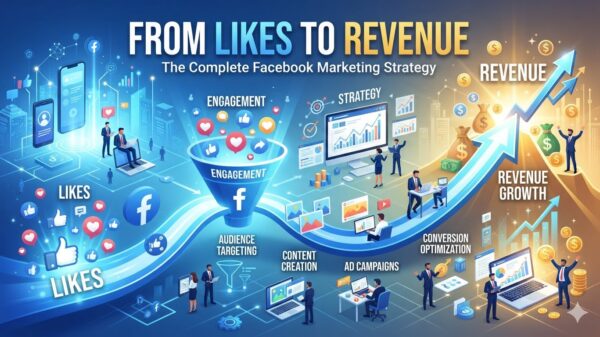
Facebook has evolved from a social networking site into a robust economic engine, requiring a sophisticated Facebook marketing strategy to generate substantial monthly income. With the roll out of Meta’s unified content monetization framework, the platform rewards original text, images, short-form Reels, and long-form videos under a single programmatic umbrella. Navigating this ecosystem demands more than just uploading content; it requires a clear grasp of algorithmic preferences, strict adherence to community guidelines, and a diversified monetization approach. This comprehensive guide details the practical steps, technical requirements, and best practices needed to build a sustainable revenue stream using an optimized Facebook marketing strategy.
Earning money through Facebook involves utilizing Meta’s unified Content Monetization program, running branded partnerships, or driving external traffic to monetized blogs. Key methods include in-stream ads, Reels performance payouts, and fan subscriptions.
Introduction to the Modern Facebook Marketing Strategy
- Understanding Facebook’s Unified Content Monetization
Meta transitioned its monetization structure into a unified system that evaluates public content performance across multiple formats. Rather than managing separate applications for Reels, video ads, and performance bonuses, creators are onboarded into a streamlined ecosystem.
Eligible Content Formats
- Public Photos and Images: High-resolution, original graphic designs, photography, and text-based images that draw massive user engagement.
- Facebook Reels: Short-form vertical videos lasting a minimum of 10 seconds that capture rapid user attention in the mobile feed.
- Long-Form Videos: Traditional native video uploads that utilize in-stream ad placements.
- Stories: Short ephemeral updates lasting at least 5 seconds.
Core Requirements for Access
To qualify for payouts, your Page or personal profile operating in Professional Mode must meet baseline operational criteria:
- Compliance with Partner Monetization Policies and Content Monetization Policies.
- Consistent publishing history, typically demonstrating active posting across multiple days within a 30-day cycle.
- Residency in an eligible country and an active, verified payout account.
Creators can activate multiple streams of revenue simultaneously once their accounts achieve good standing and audience traction.
2. Core Monetization Channels Explained
In-stream ads allow you to place video advertisements before, during, or after your long-form video content. Viewers must watch a qualifying duration of the video for the impression to count toward your revenue share. Focus on content that retains viewer attention past the initial 5-to-10-second window.
Fan Support, Stars, and Subscriptions
- Facebook Stars: Viewers purchase digital stars and send them as virtual gifts during live streams or on eligible video content. Each star typically translates to financial value for the creator.
- Fan Subscriptions: Loyal followers pay a recurring monthly fee in exchange for exclusive perks, such as subscriber-only posts, private live streams, and special chat badges.
Branded Content and Partnerships
Collaborating directly with commercial entities allows you to publish sponsored posts where a partner brand is tagged using official branded content tools. This revenue happens independently of Meta’s ad distribution pool, making it ideal for niche creators who command high engagement from a targeted demographic.
3. Avoiding Pitfalls and Policy Violations
Meta utilizes strict automated moderation to flag accounts engaging in prohibited behaviors. Violating these rules can restrict your reach or permanently revoke your payout eligibility.
What to Avoid
- Unoriginal Content: Re-uploading videos with external platform watermarks (such as TikTok or CapCut) or posting reaction clips without adding significant original value.
- Engagement Bait: Using explicit text captions that ask users to “like, share, or comment” artificially to boost metrics.
- Unauthorized Audio: Using commercial music tracks that are not cleared or included within Meta’s licensed sound collection.
- Misleading Thumbnails: Using clickbait or unrelated imagery to artificially inflate video click rates.
4. Driving Traffic from Facebook to External Websites
If you own an independent blog or digital publication, Facebook serves as an exceptional referral engine.
Strategic Sharing
- Post Native Teasers: Instead of dropping a bare link, write an engaging summary or present an interesting graphic directly on Facebook, placing the link to your website inside the caption or comments.
- Utilize Facebook Groups: Build or participate in niche communities where sharing informative articles adds genuine value rather than looking like spam.
- Monitor External Conversion: Track your referral metrics via analytics tools to see which post styles drive the highest quality traffic to your monetization setup (such as display ads or affiliate offers on your site).
5. Best Practices for Long-Term Success
Building a reliable income source requires treating your Facebook presence like a professional media business.
- Pick a Focused Niche: Audiences follow pages that offer consistent, predictable value—whether that is tech education, local news, cooking, or entertainment.
- Maintain Consistency: Regular posting schedules signal stability to both your audience and the recommendation algorithm.
- Engage Meaningfully: Spend time in the comment sections replying to your early viewers to foster a loyal community that drives organic distribution.
6. Actionable Strategy to Scale Reach and Engagement
Monetization relies entirely on visibility. To scale your Facebook presence to a level that generates consistent full-time revenue, implement this tactical blueprint.
[Audience Interaction] ──> [ Algorithmic Signals Boosted ] ──> [ Broader Organic Reach ]
▲ │ ▲
└────────────────── [ High-Quality Video Formats ] <────────────┘
Optimize Video Hook Structure
The first three seconds of any video or Reel determine its financial success. Avoid long introductions or generic title screens. Start directly with the climax, a shocking statement, or a visual question that forces the viewer to stay to find out what happens next.
Leverage the Core Share Metric
Facebook’s algorithm prioritizes the “Share” action over simple “Likes” or generic comments. Create content that evokes utility or strong resonance. Ask yourself: “Would someone share this to their own profile to make themselves look funny, smart, or informed?” If the answer is no, refine the script or the focal image.
7. Diversified Content Blueprint
Relying on a single content format leaves your revenue vulnerable to algorithmic updates. A resilient digital media business uses a diversified weekly schedule:
- Monday: High-utility informational Photo post (drives early engagement and discussion).
- Tuesday: Vertical Facebook Reel (targets the discovery feed to acquire new followers).
- Wednesday: 4-Minute Native Long-Form Video (optimized for Mid-Roll In-Stream Ads).
- Thursday: Behind-the-scenes Photo or text-based question (builds Community trust).
- Friday: Compilation Reel or Live Broadcast (ideal for collecting Fan Stars).
8. Analyzing Monetization Metrics
To maximize your monthly payout, you must transition from a creative mindset to an analytical one. Spend time weekly in your Meta Business Suite reviewing these key data points:
1-Minute Video Views
For long-form content, check how many users cross the 1-minute mark. This is the critical window where mid-roll ads are served. If your drop-off rate is steep before 60 seconds, your intro is too slow.
RPM (Revenue Per Mille)
This metric represents how much money you earn per 1,000 views. RPM varies drastically based on target audience demographics. Views from regions with high corporate ad spend (like North America or Western Europe) yield a significantly higher RPM than views from developing markets.
Returning Viewers
A high percentage of returning viewers signals to Meta that your Page is a destination, not a random scroll stop. The system rewards destination pages with safer ad delivery and steadier algorithmic baseline traffic.
Summary Checklist for Meta Monetization Success
| Phase | Core Objective | Primary Milestone |
| 1. Setup | Professional Mode or Page creation | Complete identity verification and link a secure payout bank account. |
| 2. Compliance | Strict policy adherence | Ensure 100% original content without watermarks or unlicensed audio. |
| 3. Growth | Audience retention | Achieve consistent watch time by placing strong hooks in the first 3 seconds. |
| 4. Payout | Diversified revenue | Combine In-Stream Ads, Reels payouts, and direct brand sponsorships. |
9. Advanced Growth Frameworks for 2026
To stay ahead in the shifting social landscape, creators must deploy advanced strategies that go beyond basic posting consistency.
Algorithmic Seeding via Professional Mode
If you are starting from zero, utilizing a personal profile switched into Professional Mode can yield faster initial distribution than a brand new business Page. Meta’s recommendation engine frequently seeds content from established personal networks to test engagement metrics before pushing it to the wider global feed.
The Direct Comment-to-Inbox Strategy
When driving traffic to external websites or digital products, avoid pasting raw hyperlinks directly in the post description. The algorithm frequently limits the reach of posts containing external links. Instead, use a text call-to-action like: “Comment ‘GUIDE’ below, and I will send the link directly to your inbox.” You can then automate responses using approved Meta API partner tools. This strategy achieves two goals simultaneously:
- It generates massive comment volume, which signals high engagement to the algorithm.
- It moves your audience into a private communication channel where you can sell products directly.
10. Navigating the Legal and Tax Landscape
Treating your Facebook monetization strategy as a legitimate enterprise requires setting up a clean financial and legal foundation.
- Tax Compliance: Meta will pause all payouts if you do not submit a completed digital tax form (such as the W-8BEN for non-US creators or W-9 for US creators) through your Meta Business Suite dashboard.
- Copyright Cleared Assets: Never rely on the excuse of “fair use” when using copyrighted movie clips or music. Use the built-in Meta Sound Collection, which offers thousands of high-quality tracks that are 100% cleared for monetization.
- Corporate Structure: As your monthly ad revenue grows, transition your payout profile from an individual tax identification number to a registered corporate entity (like an LLC). This move protects your personal assets and simplifies business expense write-offs like editing software, cameras, and internet costs.
11. Maximizing Your Payout Schedule and Settings
Once your page begins generating steady engagement, configuring your financial dashboard correctly is vital to avoid long payout delays.
Understanding the Payout Threshold
Meta issues payments monthly. Payouts are dispatched around the 21st of each month for the earnings accumulated during the previous calendar month. However, funds are only released once your balance reaches the $100 minimum threshold. If your page earns $45 in your first month and $65 in the second, Meta rolls the balance over, issuing a combined payment of $110 during the third month’s cycle.
Choosing Your Payment Method
You can link either a traditional bank account or a verified PayPal account to your Meta Business Suite Payout Section. For creators outside North America, direct bank transfers are highly recommended over PayPal. Bank wires generally incur fewer percentage-based transaction fees on large cross-border sums, ensuring you keep a higher margin of your gross ad revenue.
12. Troubleshooting Sudden Drops in Reach or Earnings
It is common for creators to experience sudden drops in views or payouts. Understanding how to diagnose these issues quickly keeps your digital business afloat.
- Check the Monetization Recommendation Tab: Always review your page status dashboard first. Meta explicitly logs policy warnings, “yellow flags,” or “red flags” here. If your page is hit with an “Unoriginal Content” flag, your distribution drops instantly.
- Analyze the “Silenced Distribution” Penalty: If you post low-effort AI graphics or clickbait text formats, Meta’s ranking system may suppress your page’s overall visibility without issuing an official policy violation. To recover, delete the underperforming or spammy posts and pivot entirely to high-quality, authentic video setups starring real individuals.
- Audit Video Ad Placement Metrics: If your views remain high but your earnings plunge, check your ad impressions. Viewers must watch at least one full minute of a long video to trigger mid-roll ads. If your early-video drop-off rate spikes, audit your pacing to re-engage viewers before the 60-second mark.
13. Future-Proofing Your Strategy Against Algorithm Shifts
The digital landscape changes rapidly. Relying solely on Facebook’s native distribution introduces platform risk. Protecting your digital media revenue requires building an omnichannel strategy.
┌──────────────────────┐
│ Facebook Audience │
└──────────┬───────────┘
┌────────────────┴────────────────┐
▼ ▼
┌──────────────────────┐ ┌──────────────────────┐
│ Owned Email List │ │ Independent Blog │
└──────────────────────┘ └──────────────────────┘
Cultivate an Owned Email List
Use your peak Facebook visibility periods to funnel your hyper-engaged followers into an independent email newsletter. Offer free informational resources, exclusive guides, or digital coupons in exchange for subscriber sign-ups. Your email list is an audience asset you own completely, immune to future algorithm changes or platform policy rewrites.
Establish a Multi-Platform Portfolio
Repurpose your high-performing content formats. A horizontal video optimized for Facebook In-Stream ads can be trimmed down into vertical Reels. These short vertical assets should be systematically shared across Instagram, YouTube Shorts, and TikTok. Diversifying your audience footprint guarantees that a sudden shift on one platform won’t disrupt your core income.
Conclusion
Building a scalable, sustainable business on Facebook requires transitioning from a hobbyist mindset to that of a disciplined publisher running a structured Facebook marketing strategy. The era of hacking the system with unoriginal loops or engagement bait is gone. The creators winning the digital marketplace focus heavily on producing undeniable, original value that aligns with platform guidelines.
By mastering the unified Meta Content Monetization framework, tracking your key retention metrics weekly, and building community hubs that convert casual scrollers into loyal subscribers, you turn social media into a reliable commercial enterprise. Diversifying your content formats, respecting community guidelines, and treating page data as an analytical roadmap are the foundational steps to future-proof your overall Facebook marketing strategy.




Smrity Computer- Speaker of Technology. Leading Technology related website. We provide contents about solution of computer and mobile phone issues, latest tech and gadget related news, networking and freelancing tips including SEO, video marketing on YouTube, blogging, digital marketing etc.
Find Us On Social Media



Leave a Reply